Naira Volatility: Strategies for Businesses to Stay Afloat by Olufemi Boyede
Part 1
Navigating Nigeria’s Economic Turbulence: Strategies for Businesses
Introduction
Nigeria is the largest economy in Africa, with the naira being the official currency. Over the past year, the naira has experienced significant volatility against major currencies like the US dollar. This rapid naira depreciation has had important implications for Nigerian businesses and consumers.
This article aims to provide an overview of the recent naira volatility, assess its impact on the business environment and consumers, and discuss potential business strategies to survive these challenging times. The article will also highlight policy recommendations to support businesses and stabilise the naira.
The scope covers the causes and effects of naira depreciation over the past year up to February 2024. It will analyse how the weaker naira has affected Nigerian businesses’ operating costs and profitability, especially exporters. The impact on consumer purchasing power and cost of living will also be assessed. Finally, the article will provide practical strategies for businesses to stay afloat amidst forex volatility and policy solutions for the government to support enterprises.
History of the Naira
The naira was introduced in 1973, replacing the Nigerian pound and becoming Nigeria’s official currency. At that time, it was pegged to the British pound: 1 naira = 1.52 British pounds.
Over the years, the naira has been devalued multiple times to manage economic shocks and maintain export competitiveness. Some significant devaluations include:
- 1986 – Devalued by over 50% against the US dollar due to falling oil prices
- 1992 – Devalued by 15% after being relatively stable throughout the 1980s
- 1999 – Devalued again after the emergence of democracy in Nigeria
- 2014 – Devalued by about 10% amid falling oil prices
- 2016 – Allowed to float freely on the foreign exchange market for the first time, resulting in over 30% devaluation
In 2016, Nigeria adopted a managed float system to stabilise the currency. This system allowed the central bank to intervene periodically in the FX market to influence the exchange rate. However, currency pressures have persisted despite these efforts.
Recent Naira Depreciation
The naira has experienced significant depreciation over the past year, with the exchange rate reaching record lows against the US dollar. In 2022, the official exchange rate was around 415 naira per dollar, while the black market rate was about 565 naira per dollar. However, as of February 2023, the naira’s value had deteriorated sharply, with the official rate hitting 760 naira per dollar and the parallel market rate exceeding 1,800 naira per dollar.
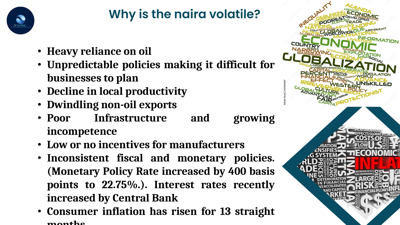
This disparity between the official and black market exchange rates has been growing wider, indicating a foreign exchange liquidity crisis. Several factors are responsible for the naira’s volatility:
-
There is a high demand for dollars. Importers, foreign investors, and Nigerians seeking offshore healthcare and education have boosted demand. On the other hand, the dollar supply remains low due to reduced oil earnings. This mismatch has exerted pressure on the naira.
-
Depleting foreign reserves – Nigeria’s foreign reserves dropped below $40 billion three years ago from over $60 billion. With lower reserves, the CBN has limited capacity to intervene and defend the naira.
-
Speculation – Activities of currency speculators who hoard dollars in anticipation of further devaluation have also impacted the exchange rate.
-
Policy changes – The CBN has frequently changed monetary policies on forex access – from banning certain imports and direct dollar sales to BDCs to asking banks to stop open market sales to retail customers. This unpredictability creates uncertainty.
The acute dollar shortage and policy flip-flops have triggered a naira freefall, hurting businesses dependent on imports and foreign exchange availability.
Impact on Businesses
The rapid depreciation of the naira is having a significant impact on businesses in Nigeria. Four key ways businesses are being affected include:
Rising Cost of Imports
Many Nigerian businesses rely on imported inputs, raw materials, and machinery. With the declined value of the naira, the cost of these imports has skyrocketed. Businesses must now spend more naira to purchase the same imported goods. This strains budgets and reduces profit margins.
Unpredictable Operating Environment
The volatility of the naira makes for an unpredictable operating environment. Businesses have trouble planning and forecasting when they cannot anticipate the currency rate. This uncertainty around pricing and costs makes it extremely difficult to budget and manage finances.
Difficulty Planning and Budgeting
The fluctuating currency wreaks havoc on financial planning and budgeting. When exchange rates seesaw wildly week to week, it becomes nearly impossible for businesses to forecast expenses and revenues accurately. This lack of stability leaves exposed companies.
Low Purchasing Power of Consumers
With high inflation, Nigerian consumers have substantially reduced purchasing power. Their naira does not go nearly as far today as it used to. This means businesses often face declining demand as consumers cut back spending. Tighter household budgets translate to reduced sales and revenue for businesses.
Impact on Consumers
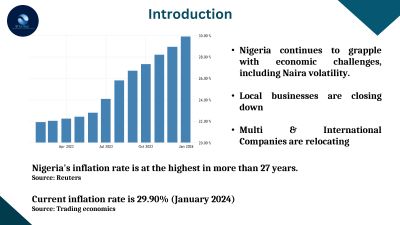
The volatile exchange rate and high inflation have significantly impacted Nigerian consumers. In January 2024, the inflation rate rose to nearly 30%, the highest rate in 27 years. This has led to a steep price increase for essential goods and services.
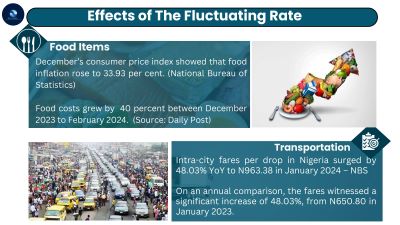
The price of food items grew by 40% between December 2023 and February 2024. Intra-city transportation fares increased 48% in January 2024 compared to the previous year. Airfares have doubled over the past year, making domestic and international travel extremely expensive for Nigerians.
The high inflation has also led to a shrinking package size phenomenon called “shrinkflation”. Consumer staples like milk, sugar and detergents that used to be sold in 450g packs are now being sold in 300g packs at more than double the price.
The impact of these price increases is a drastically reduced standard of living and purchasing power for average Nigerian consumers. Food, transportation, and housing take up a higher share of incomes, leaving less for healthcare, education, and other needs. The volatile exchange rate and high inflation have made it difficult for many Nigerians to afford essential goods and services.
Read Part 2 of this blog here.